Before the Contract Is Signed: Structuring Lawful Pre-Employment Assessments for Personal Assistants

Photo: PDPhoto.org, Public domain, via Wikimedia Commons
The Trial Day: A Common Practice With Hidden Risks
For many private employers, the final stage of hiring a personal assistant involves some form of hands-on assessment. A candidate might be invited to spend a morning working alongside the existing household routine, to complete a specific task that mirrors the role's demands, or simply to meet informally in the home before a formal offer is made. These approaches are entirely understandable — hiring someone who will work closely with you and your family is a decision that benefits from real-world observation.
The difficulty is that what feels like a sensible precaution can, if poorly structured, trigger obligations and liabilities that most private employers have never considered. Understanding where the law draws the line is essential before inviting any candidate to perform work — however brief or informal — on your behalf.
When a Trial Becomes Employment
The National Minimum Wage Act 1998 and its associated regulations do not operate on the basis of intent. Whether or not you consider a candidate to be an employee, if they are performing work under your direction and for your benefit, they are likely to be a worker for minimum wage purposes — and must be paid accordingly.
 Photo: National Minimum Wage Act 1998, via m.media-amazon.com
The key question is whether the activity in question constitutes genuine work. A candidate who accompanies you through a typical day, performing tasks they would be expected to carry out in the role — preparing meals, assisting with correspondence, supporting a family member with daily activities — is almost certainly working in the legal sense. The fact that you have framed the arrangement as a trial, or that no contract has been signed, does not alter this analysis.
HMRC takes this position seriously. Employers found to have required unpaid trial shifts — in any sector — face back-pay liability for all hours worked, civil penalties, and potential naming in HMRC's public enforcement register. For private household employers, who may not have considered themselves subject to the same scrutiny as commercial businesses, this can come as a significant shock.
What Is Legitimately Unpaid?
Not every pre-employment interaction creates a minimum wage obligation. The law distinguishes between activities that constitute work and those that amount to an assessment or selection process.
The following activities are generally unlikely to trigger payment obligations:
- Interviews and discussions: Conversations about the role, the household's expectations, and the candidate's experience are clearly part of a recruitment process rather than the performance of work.
- Short skills demonstrations: Asking a candidate to demonstrate a specific, brief capability — such as showing how they would approach a particular communication task or describe their organisational system — does not typically constitute work, provided it is genuinely evaluative and not productive.
- Unpaid working interviews disclosed in advance: Where an employer makes clear that a short trial element is part of the selection process, does not derive direct benefit from the work performed, and limits the duration appropriately, there is greater scope to argue that minimum wage obligations do not apply. However, this is a nuanced area and professional advice is recommended.
The critical distinction is between an activity designed to assess a candidate and one that generates genuine value for the employer. If your household benefits from the candidate's presence — meals are prepared, tasks are completed, care is provided — payment is very likely required.
Practical Steps for Compliant Assessments
The good news is that effective candidate evaluation and legal compliance are entirely compatible. The following approach allows household employers to make well-informed hiring decisions without creating unnecessary legal exposure.
Pay for working trials. If you wish to observe a candidate performing tasks representative of the role, treat this as a paid engagement. Calculate the applicable minimum wage rate for the hours in question and pay accordingly. This is not an onerous cost — a half-day assessment at the National Living Wage represents a modest outlay — and it removes the legal risk entirely.
Define the assessment clearly in writing. Before any trial or task-based activity takes place, provide the candidate with a written summary of what will happen, how long it will last, and what rate of pay applies. This protects both parties and establishes a clear record of the arrangement.
Limit the scope of unpaid activity to genuine evaluation. If you choose to include an unpaid element — such as a brief scenario-based discussion or a short skills demonstration — ensure it is genuinely evaluative, time-limited, and not directly productive. Document your rationale.
Apply the same process to every candidate. Inconsistency in how candidates are assessed opens the door to discrimination claims. If one candidate is asked to complete a paid working trial and another is not, or if the nature of the assessment differs significantly between individuals, you may face questions about whether protected characteristics influenced the process. Applying a consistent, documented framework to all shortlisted candidates is the most effective protection.
The Discrimination Dimension
Beyond minimum wage considerations, pre-employment assessments carry a secondary legal risk that household employers frequently overlook: indirect discrimination.
If your assessment process disadvantages candidates with particular protected characteristics — for example, if a lengthy unpaid trial disproportionately excludes candidates who cannot afford to work without pay, or if the format of an assessment places candidates with certain disabilities at a disadvantage — you may face a claim under the Equality Act 2010. This applies even where the disadvantage was entirely unintentional.
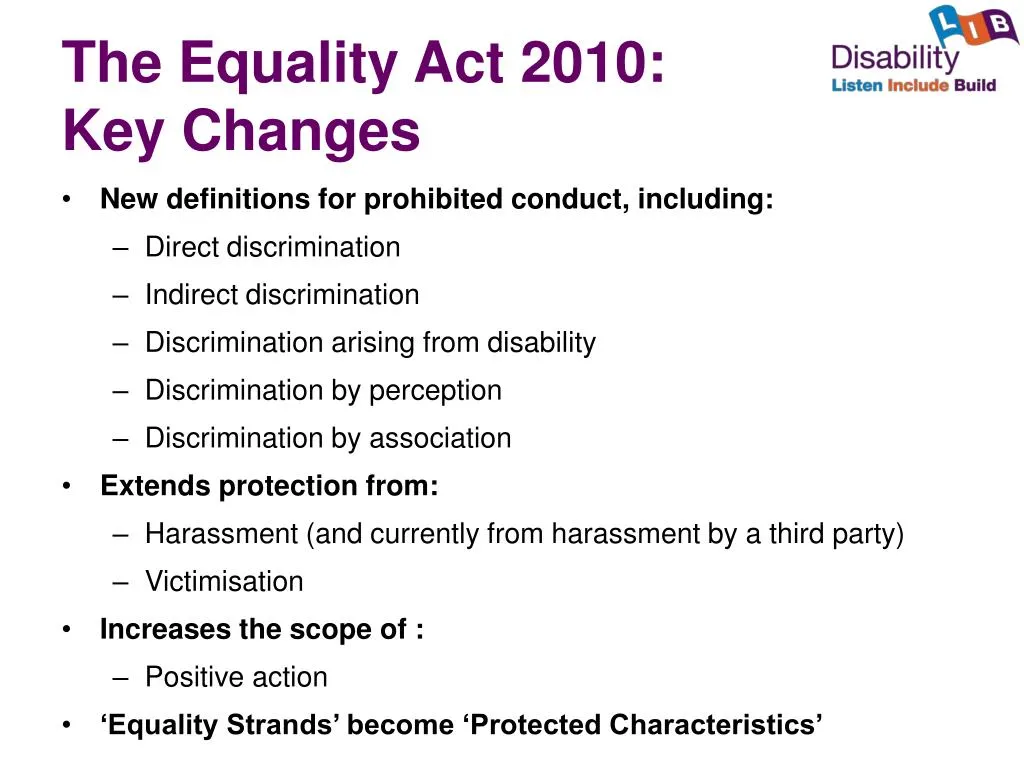 Photo: Equality Act 2010, via image1.slideserve.com
Designing assessments that are proportionate, relevant to the role, and accessible to a broad range of candidates reduces this risk considerably. Where reasonable adjustments may be required — for example, for a candidate with a disability — these should be offered proactively.
Documenting Candidate Assessments
Regardless of the format your assessment takes, maintaining clear records is essential. Document the criteria against which candidates were assessed, the scores or observations recorded, and the rationale for the hiring decision. Retain these records for a minimum of six months following the conclusion of the recruitment process.
In the event of a challenge — whether a minimum wage complaint to HMRC or a discrimination claim at tribunal — contemporaneous documentation is your most valuable asset. The absence of records, by contrast, makes it significantly harder to demonstrate that your process was fair, consistent, and lawful.
Hiring the right personal assistant is a decision that shapes the daily life of your household. Investing a little additional care in how you structure the evaluation process is a small price to pay for the confidence that your recruitment has been conducted on solid legal ground.