Under One Roof: The Legal and Practical Framework for Employing a Live-In Personal Assistant
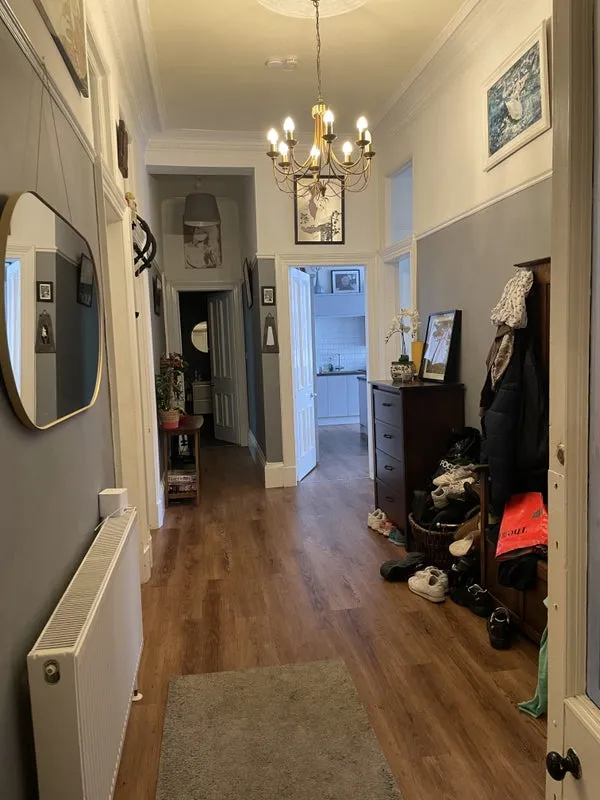
Photo: spare room prepared as staff accommodation in family home UK, via photos2.spareroom.co.uk
When Home Becomes a Workplace
The decision to employ a live-in personal assistant is rarely taken lightly. For many households, it represents a practical necessity — whether driven by the care needs of a family member, the demands of a particularly complex schedule, or a requirement for round-the-clock support. Yet the moment accommodation enters the employment equation, a layer of legal and interpersonal complexity follows that many employers are simply unprepared for.
This article works through the principal considerations in order of priority: the financial and legal framework, the question of working time, and the human dimension of sharing your home with a member of staff.
The Accommodation Offset: Understanding Its Limits
One of the most commonly misunderstood aspects of live-in employment is the interaction between the provision of accommodation and the National Minimum Wage. Many private employers assume, incorrectly, that providing free housing allows them to reduce a PA's cash wage to a negligible amount. The law is considerably more restrictive.
HMRC permits employers to apply what is known as the accommodation offset — a fixed daily rate by which the cash element of pay can be reduced when accommodation is provided free of charge. The offset rate is set by the government and changes periodically; as of the current rate year, it stands at £9.99 per day. This means that for every day accommodation is provided, an employer may reduce the cash wage by up to this amount when calculating whether minimum wage obligations have been met.
To illustrate: if your PA is entitled to the National Living Wage and works full-time, you must ensure that the combination of cash pay and the permitted offset meets or exceeds the minimum wage threshold for all hours worked. Providing accommodation does not suspend your obligation to pay at least the minimum wage — it simply adjusts how part of that obligation may be met.
Employers who fail to understand this distinction risk HMRC enforcement action, back-pay liability, and potential reputational damage.
Defining Working Time Under One Roof
Perhaps the most practically challenging aspect of live-in arrangements is the question of when work begins and ends. In a conventional employment setting, this is determined largely by geography: the employee arrives, works, and leaves. When employer and employee share a home, these boundaries dissolve.
The Working Time Regulations 1998 apply to live-in staff in the same way they apply to all workers. Your PA is entitled to adequate rest breaks, daily rest periods, and a maximum average working week of 48 hours (unless they have signed a valid opt-out). These entitlements do not disappear simply because your assistant sleeps in the next room.
A written agreement setting out the PA's contracted hours, rest periods, and the distinction between on-call time and genuine free time is not merely advisable — it is legally necessary. Specifically, you should address:
- Core working hours: The specific hours during which the PA is expected to be available and working.
- On-call periods: Time during which the PA must be available to respond but is otherwise free. Note that depending on the nature of the on-call obligation, this time may count as working time for minimum wage purposes.
- Off-duty time: Periods during which the PA is genuinely free to use as they choose, including leaving the property.
- Overnight duties: If the PA is expected to perform sleep-in duties — remaining on the premises and available to respond — these carry specific minimum wage implications that must be addressed separately in the contract.
Accommodation Arrangements: Practical Considerations
The physical living arrangement matters both practically and legally. A PA who lives in a self-contained annexe is in a meaningfully different position from one who occupies a spare bedroom within the main household. The degree of privacy and separation affects not only the working relationship but also the PA's sense of personal space and autonomy — factors that bear directly on retention and wellbeing.
Where possible, providing genuinely separate accommodation — with its own entrance, kitchen facilities, and bathroom — establishes a clearer boundary between the working and private spheres. Where this is not possible, a written agreement specifying which areas of the home are the PA's private space and which are shared or employer-only is strongly recommended.
Consider also the practical question of utilities and amenities. Will the PA contribute to household bills? Will they have access to shared facilities such as laundry or internet at all times? These arrangements, however informal they may seem, should be documented in writing to avoid ambiguity.
Tax Implications of Providing Accommodation
Providing accommodation to an employee is treated as a benefit in kind for tax purposes, with limited exceptions. Where the accommodation is provided for the better performance of the PA's duties — and it is customary for employers in that type of employment to provide it — the benefit may be exempt from income tax. Domestic employers should seek advice from a payroll professional or tax adviser to confirm whether the exemption applies to their specific circumstances, as the conditions are interpreted narrowly.
Failing to account correctly for accommodation as a benefit in kind can result in unexpected tax liabilities for both employer and employee.
Managing the Interpersonal Reality
Beyond the legal framework lies a dimension that no legislation fully addresses: the emotional and relational complexity of sharing your home with an employee.
Live-in arrangements are inherently more intimate than day-based employment. Your PA will observe aspects of your household and family life that a visiting employee would not. Equally, you will be present in their living environment in a way that can feel intrusive without appropriate boundaries.
Establishing mutual expectations from the outset — ideally documented in a household staff handbook — is the most effective way to manage this complexity. Subjects worth addressing explicitly include:
- Whether the PA may have personal guests in their accommodation
- Expectations around shared spaces and household routines
- How off-duty time will be respected by both parties
- The process for raising concerns or grievances in an environment where daily contact is unavoidable
Live-in employment, when structured correctly, can be a highly effective and mutually beneficial arrangement. The employers who find it most rewarding are invariably those who invest time at the outset in building a clear, documented framework — one that protects both the household and the individual who has made it their home.